Dermatomyositis is an autoinflammatory and autoimmune disease that primarily affects the skin and striated muscle. It may also involve the lungs and can be complicated by calcinosis. Despite its considerable morbidity and the significant impact on quality of life, IV immunoglobulin (IVIg) remains the only treatment approved to date by the US Food and Drug Administration (FDA). This approval was based on a phase III, placebo-controlled clinical trial published in 2022 that included 95 patients. In that study, 79% of patients treated with IVIg (2g/kg every 4 weeks for 16 weeks) achieved improvement in the Total Improvement Score (TIS) vs 44% in the placebo group (p<0.001). Moreover, more than 70% of patients achieved at least a 35% improvement in the Cutaneous Dermatomyositis Activity and Severity Index-Activity (CDASI-A) score at week 28. However, patients with predominantly cutaneous disease were excluded, limiting the generalizability of these findings to this subgroup.1 In clinical practice, IVIg is generally reserved for severe disease refractory to corticosteroid therapy. Beyond IVIg, pharmacologic management typically includes glucocorticoids as first-line therapy, often combined with immunosuppressants such as azathioprine, methotrexate, and mycophenolate mofetil to improve efficacy and reduce steroid dependence.
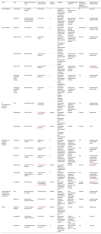
Recently, 3 working groups have reviewed current and emerging therapies for dermatomyositis, with particular emphasis on the cutaneous domain. A summary of these treatments, their mechanisms of action, and clinical outcomes is shown in Table 1.2–4
New drugs for the treatment of dermatomyositis.
| Class | Drug | Specific mechanism of action | Clinical trial or reference studya | Level of evidenceb | Endpoints | Main dermatologic outcomes | Evidence of effectiveness in cutaneous dermatomyositisc | Current status in dermatomyositis |
|---|---|---|---|---|---|---|---|---|
| T-cell inhibitors | Tocilizumab | IL-6 receptor inhibitor | Clinical trial | 4 | Evaluate the safety and efficacy profile of tocilizumab in refractory DM and PM | No improvement vs placebo | No | Not used |
| Abatacept | CD80/86 inhibitor preventing ligand binding to CD28 | Clinical trial | 2 | Evaluate the safety and efficacy profile of abatacept in refractory DM and PM | Improvement in muscular and dermatologic outcomes (CDASI) | Possible | Available target (frequently used) | |
| B-cell inhibitors | Rituximab | IL-20 inhibitor | Clinical trial | 2 | Evaluate the safety and efficacy profile of rituximab in refractory DM and PM | Initial trial showed dermatologic improvement, but later not confirmed | Contradictory | Available target (frequently used) |
| Obinutuzumab | IL-20 inhibitor | Single case report | 4 | Evaluate the safety and efficacy profile of obinutuzumab in a patient with antisynthetase syndrome refractory to rituximab | Improvement in cutaneous and extracutaneous domains | Possible | Available target (rarely used) | |
| Daratumumab | CD38 inhibitor | Case series (3 patients) | 4 | Evaluate the safety and efficacy profile of daratumumab in two DM and one PM patient | Improvement in cutaneous and extracutaneous domains | Possible | Available target (rarely used) | |
| Belimumab | BLyS inhibitor | Case series (13 patients) | 4 | Evaluate the safety and efficacy profile of belimumab in DM and juvenile DM | Improvement in cutaneous and muscular domains | Possible | In clinical trial (NCT02347891) | |
| Autologous anti-CD19 CAR-T therapy | CD19 inhibitor | Case series (5 patients) | 4 | Evaluate the safety and efficacy profile of anti-CD19 CAR-T therapy in antisynthetase syndrome | Improvement in cutaneous and extracutaneous domains | Yes | Available target (rarely used) | |
| Autologous anti-BCMA CAR-T therapy | BCMA inhibitor | Single case report | 4 | Evaluate the safety and efficacy profile of anti-BCMA CAR-T therapy in immune-mediated necrotizing myopathy | Improvement (no reference to cutaneous domain) | Possible | Available target (rarely used) | |
| IV immunoglobulins and FcRn inhibitors | IVIg | Ig receptor inhibitor | Randomized clinical trial | 1 | Evaluate the safety and efficacy profile of IVIg vs placebo in DM | Improvement in cutaneous (CDASI and others) and extracutaneous domains | Yes | Available target (frequently used) |
| Efgartigimod | FcRn inhibitor | NCT05669014 (phase II/III) | Pending | Evaluate the safety and efficacy profile of efgartigimod in DM, PM, and antisynthetase syndrome | Pending | Pending | Ongoing trial | |
| Nipocalimab | FcRn inhibitor | NCT05379634 (phase II) | Pending | Evaluate the safety and efficacy profile of nipocalimab in DM, PM, and antisynthetase syndrome | Pending | Pending | In trial | |
| JAK/STAT and interferon-pathway blockers | Ruxolitinib | Dual JAK1/JAK2 inhibitor | Single case report | 3 | Evaluate the safety and efficacy profile of ruxolitinib in refractory DM | Improvement in cutaneous (CDASI) and extracutaneous domains | Yes | Available target (occasionally used) |
| Tofacitinib | Pan-JAK inhibitor | Case series (10 patients) | 3 | Evaluate the safety and efficacy profile of tofacitinib in refractory DM | Improvement in cutaneous (CDASI) and extracutaneous domains | Yes | Available target (occasionally used) | |
| Baricitinib | Dual JAK1/JAK2 inhibitor | Case series (3 patients) | 3 | Evaluate the safety and efficacy profile of baricitinib in refractory DM | General improvement in cutaneous (CDASI) and extracutaneous domains | Yes | Available target (occasionally used); phase II trial ongoing in France (NCT05524311) | |
| Brepocitinib | Dual JAK1/TYK2 inhibitor | NCT05437263 (phase III) | Pending | Evaluate the safety and efficacy profile of brepocitinib in DM | Pending | Pending | Ongoing trial | |
| Anifrolumab | Type I interferon receptor subunit 1 inhibitor | Case series (4 patients) | 3 | Evaluate the safety and efficacy profile of anifrolumab in refractory DM | Improvement in cutaneous (CDASI and others) and extracutaneous domains | Yes | Available target (occasionally used); phase III trial ongoing (NCT06455449) | |
| Dazukibart | IFN-β inhibitor | Phase II clinical trial completed (NCT03181893) | Pending | Evaluate the safety and efficacy profile of dazukibart in refractory DM | Improvement in cutaneous, muscular, and internal domains | Pending phase III | In phase III trial (NCT06698796) | |
| Antioxidants and mitochondrial oxidative-stress modulators | NAC | Antioxidant, ROS scavenger | Preclinical study | Pending | Evaluate relationship between NAC and interferon signature | NAC downregulates interferon-related gene expression | Possible | Available target (rarely used) |
| Metformin | Mitochondrial complex I inhibitor | Preclinical trial | Pending | Evaluate relationship between metformin and NETs | May reduce NETs and innate immune response | Possible | Available target (rarely used) | |
| Others | Enpatoran (M5049) | TLR7/8 inhibitor in dendritic cells | NCT05650567 (phase II) | Pending | Evaluate the safety and efficacy profile of brepocitinib in PM and DM | Pending | Pending | Ongoing trial |
| Lenabasum | Cannabinoid receptor 2 inhibitor | Clinical trial | Pending | Evaluate the safety and efficacy profile of lenabasum in DM | Phase III results similar to placebo, which is why it is not recommended | No | Not used | |
| Apremilast | Phosphodiesterase-4 inhibitor | Non-randomized clinical trial | 2 | Evaluate the safety and efficacy profile of apremilast in DM | Overall CDASI response rate>85% | Yes | Not used | |
BCMA: B-cell maturation antigen; BLyS/BAFF: B-cell activating factor; CDASI: Cutaneous Dermatomyositis Disease Area and Severity Index; CAR-T: Chimeric Antigen Receptor T-cell therapy; CD: cluster of differentiation; DM: dermatomyositis; FcRn: neonatal Fc receptor; IFN: interferon; IL: interleukin; IVIg: intravenous immunoglobulin; JAK: Janus kinase; NAC: N-acetylcysteine; NET: neutrophil extracellular traps; PM: polymyositis; ROS: reactive oxygen species; TLR: Toll-like receptor; TYK: tyrosine kinase 2.
Broadly, these therapies act on 3 major targets: T lymphocytes, B lymphocytes, and the Janus kinase (JAK)–interferon pathway.2–4 Abatacept, a T-cell costimulation inhibitor, has demonstrated efficacy in both muscular and cutaneous signs of dermatomyositis, including juvenile and adult-onset disease. However, other case reports describe poor response to this agent, leaving its overall effectiveness uncertain.2
Regarding B lymphocytes, rituximab (anti-CD20) has shown heterogeneous results. Although the RIM trial did not find significant differences in time to improvement between early- and late-rituximab groups (p=0.74), subgroup analysis revealed significant improvement in cutaneous activity in both adults and children with dermatomyositis. Moreover, these improvements were superior when compared with cyclophosphamide.2 Additionally, several recent reports describe successful treatment with CAR-T (chimeric antigen receptor T-cell) therapy in patients with refractory antisynthetase syndrome,3,4 a condition considered by many authors to fall within the dermatomyositis spectrum, opening the door to future use of these therapies. Belimumab, a selective inhibitor of BLyS (B-cell activating factor, BAFF), has also shown potential efficacy: in a recent series of 13 patients with dermatomyositis or juvenile dermatomyositis, clinical responses—cutaneous and muscular—were observed in more than 80% of cases.5
Furthermore, the JAK–STAT–interferon axis plays a key role in the pathogenesis of dermatomyositis. Favorable responses have been described with various JAK inhibitors, particularly tofacitinib and baricitinib.2–4 Similarly, several isolated case reports have documented responses to anifrolumab, a type I interferon receptor subunit 1 inhibitor, in both juvenile and adult dermatomyositis.3,4 Currently, 3 clinical trials are underway in dermatomyositis: baricitinib (NCT05524311, phase II), anifrolumab (NCT06455449, phase III), and dazukibart (NCT06698796, phase III), the latter targeting interferon-β.3,4
Finally, apremilast, a phosphodiesterase-4 inhibitor, has shown possible efficacy in dermatomyositis, with overall response rates>80% in CDASI-A scores in a recent phase II trial at a dose of 30mg twice daily.6 Its efficacy has been proposed in paraneoplastic dermatomyositis.7
Calcinosis in dermatomyositis remains a particularly challenging complication with multiple therapeutic options described—including diltiazem, low-dose warfarin, bisphosphonates (alendronate, pamidronate), colchicine, IVIg, intralesional corticosteroids, and sodium thiosulfate—but without consistent efficacy. Responses have been reported with infliximab or hematopoietic stem cell transplantation, especially in small and early lesions. Surgery is an option for symptomatic, refractory lesions, and very rarely, spontaneous regression may occur.8
In clinical practice, treatment selection depends on the predominant domain (cutaneous, muscular, pulmonary), refractoriness to corticosteroids and classic immunosuppressants, and the availability of advanced therapies. Thus, IVIg is typically reserved for severe, multisystemic, refractory disease. In refractory cutaneous involvement, JAK inhibitors such as tofacitinib or baricitinib—which are readily available and show favorable CDASI outcomes—may be considered, while interferon pathway inhibition with anifrolumab or dazukibart may represent future options pending completion of ongoing trials, with anifrolumab already showing promising results in case series. In patients with prominent muscular involvement, abatacept or belimumab may be viable immunomodulatory alternatives. In cases of suspected B-cell–driven disease or pulmonary involvement (e.g., antisynthetase syndrome), rituximab or even anti-CD19 CAR-T therapy could be options in highly specialized settings. Finally, apremilast—with promising results in phase II trials—may be useful in predominantly cutaneous forms, including paraneoplastic disease. Despite meaningful advances, many of these therapies remain unapproved, and their use must therefore be individualized and considered primarily in refractory settings or within clinical trials.
With expanding knowledge on the pathophysiology of dermatomyositis, several new therapeutic agents are expected to be approved in the coming years for this orphan disease, particularly from a dermatologic standpoint.