

 Artículo disponible en español
Tumor necrosis factor-α (TNF-α) inhibitors are used to treat multiple inflammatory diseases. Although these agents generally exhibit a favorable safety profile, autoimmune diseases and paradoxical immune-mediated reactions have been reported in association with their use,1 including psoriasis, lichen planus, systemic or cutaneous lupus erythematosus, and hidradenitis suppurativa, among others.2 These reactions may also present as alopecia, with possible psoriasiform, lupus-like, or alopecia areata-like histologic patterns.3 Among TNF-α inhibitors, infliximab and adalimumab are the agents most frequently associated with these adverse events.2
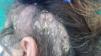
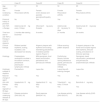
We describe 4 women who developed alopecia after receiving anti-TNF-α therapy (Fig. 1, Table 1). All underwent scalp biopsy, which demonstrated either a lupus-like or psoriasiform pattern; in one case, scarring features were present. These findings were interpreted as immune-mediated alopecias, prompting discontinuation of TNF-α inhibitors and initiation of JAK-inhibitor therapy. Three months into therapy, complete regrowth of alopecic patches was achieved, along with optimal control of the underlying disease that had led to TNF-α inhibitor initiation. The validated DAS28 and BASDAI scales were used to quantify response in rheumatoid arthritis and psoriatic spondyloarthropathy, respectively.4

Summary of the 4 cases and their management.
| Case #1 | Case #2 | Case #3 | Case #4 | |
|---|---|---|---|---|
| Age (years) | 57 | 53 | 50 | 65 |
| Sex | Female | Female | Female | Female |
| Underlying condition | Rheumatoid arthritis | Crohn disease and psoriatic spondyloarthropathy | Rheumatoid arthritis | Rheumatoid arthritis |
| Personal history of psoriasis | No | Yes | Yes | No |
| Anti-TNF-α therapy | Adalimumab 40mg every 14 days | Infliximab 5mg every 8 weeks | Adalimumab 40mg every 14 days | Adalimumab 40mg every 14 days |
| Time from start of anti-TNF-α therapy to onset of alopecia | 2 months after starting biosimilar | 9 months | 21 months | 24 months |
| Clinical findings | Bilateral parietal erythema, scaling, exudation, and decreased hair density | Alopecic plaques with erythema and scaling resembling pseudotinea in bilateral parietal regions (Figure 1) | Diffuse scarring-pattern alopecia | 2 alopecic plaques in the frontal and occipital regions with erythema, follicular scaling, and absence of follicular openings |
| Histology | Parakeratosis, neutrophilic exudate in the stratum corneum, periadnexal plasmacytic–lymphocytic infiltrate | Mild spongiosis, focal basal vacuolization, periadnexal and perivascular infiltrate | Perifollicular fibrosis, follicles lacking sebaceous glands, perivascular inflammatory infiltrate | Spongiosis, basal vacuolization, periadnexal and perivascular lymphohistiocytic infiltrate |
| Histologic subtype of alopecia | Psoriasiform | Lupus-like | Lupus-like with scarring changes | Lupus-like |
| Need for change of agent | Yes | Yes | Yes | Yes |
| Anti-JAK therapy | Upadacitinib 15mg daily | Upadacitinib 15mg daily | Tofacitinib 5mg every 12 hours | Baricitinib 4mg daily |
| Hair regrowth at 90 days | Yes | Yes | Yes | Yes |
| Control of underlying disease at 90 days | Disease remission (DAS-28 2.16) | Good response (BASDAI 1.8) | Low disease activity (DAS-28 2.67) | Low disease activity (DAS-28 2.89) |
TNF-α inhibitors are known to induce paradoxical psoriasis and drug-induced lupus, which may manifest clinically as alopecia. Several cases have been published, some treated with topical agents with limited response. Other therapeutic strategies have included switching to a different TNF-α inhibitor less commonly associated with alopecia, such as certolizumab.5 In other cases, selection of a new therapeutic target has been pursued to control the underlying disease—for example, ustekinumab in patients with Crohn disease.6
In our patients, treatment was switched to JAK inhibitors, which have been described in the management of cutaneous signs of lupus,7 although not specifically for anti-TNF-α-induced lupus. Upadacitinib, tofacitinib, and baricitinib were used depending on the underlying disease and comorbidities.8
All patients experienced regrowth of alopecic plaques, regardless of histologic pattern, including the patient with biopsy-proven scarring and fibrosis.
We believe this favorable outcome was due primarily to early initiation of therapy; however, it may also reflect the antifibrotic properties of JAK inhibitors, which could contribute to reversing follicular fibrosis. This mechanism may explain the regrowth observed even in the case with scarring alopecia on histology.
This hypothesis is supported by the use of JAK inhibitors in conditions with prominent fibrosis, such as ruxolitinib for myelofibrosis.9
An experimental study published in 2020 further demonstrated that JAK inhibitors modulate activation of profibrotic M2 macrophages, particularly those with activity vs JAK2.10
In summary, in our series, early discontinuation of the offending drug followed by initiation of JAK inhibitors was associated with robust regrowth—even in cases of scarring alopecia—as well as good control of the underlying rheumatologic disease that had originally led to TNF-α inhibitor therapy. If confirmed in additional cases, JAK inhibitors may represent a therapeutic option for immune-mediated alopecias induced by TNF-α inhibitors.
Conflict of interestThe authors declare that they have no conflict of interest.