




Coronavirus disease 2019 (COVID-19) associated telogen effluvium (CATE) has been observed in patients after infection with severe acute respiratory syndrome coronavirus 2 (SARS-CoV-2). Although it is self-limiting, hair loss can be very distressing, and some patients may seek medical treatment to help promote hair regrowth. Low-dose oral minoxidil (LDOM) has emerged as a novel and very efficient therapy for different types of alopecia. However, information on its safety and efficacy profile in the management of CATE remains scarce. This study aims to evaluate the treatment response to LDOM in CATE patients.
MethodsWe conducted a retrospective study at a single dermatology center. Adult patients diagnosed with telogen effluvium from December 2020 to October 2022, with a prior history of SARS-CoV-2 infection, and treated with LDOM were included. The efficacy of LDOM was evaluated with the hair-shedding score (HSS).
ResultsIn all, 69 patients, 50 (72.5%) women and 19 (27.5%) men were included. A total of 55 patients (79.7%) exhibited mild and moderate symptoms; 8 (11.5%), severe disease; and 6 (8.7%) remained asymptomatic. The time elapsed between COVID-19 and telogen effluvium diagnosis was 117 days (80–181). The HSS continuously decreased during the 2nd, 3rd, and 4th visits after treatment initiation. Compared with baseline, the median (interquartile range) HSS was significantly lower at the 2nd visit (5 [5–6]; P<.001), the 3rd visit (4 [3–5]; P<.001), and the 4th visit (2 [1–2]; P<.001). The time for telogen effluvium resolution was 93 days (55–148).
ConclusionsOur findings suggest that LDOM is a safe and effective therapy for patients with CATE.
The coronavirus disease 2019 (COVID-19) pandemic is an ongoing global health crisis caused by the novel coronavirus severe acute respiratory syndrome coronavirus 2 (SARS-CoV-2). Observational studies have found an association between new-onset telogen effluvium (TE) and patients infected with COVID-19.1
TE is a cause of non-scaring alopecia due to the disruption of the hair growth cycle. Diffuse excessive telogen hair loss usually occurs about 2–3 months after a triggering event, such as illness, surgery, or childbirth. Based on remission time, it can be categorized as acute or chronic TE. The former typically resolves within 6 months, while persistent hair shedding lasting longer than 6 months is called chronic TE.2
COVID-19 infection is a frequent cause of acute TE. This association is primarily related to the systemic hyperinflammatory syndrome or cytokine storm triggered by the virus. The cytokine storm is an impaired acquired immune response and uncontrolled inflammatory innate response based on the activation of Th1 cells with the subsequent secretion of proinflammatory cytokines, including granulocyte-macrophage colony-stimulating factor (GM-CSF) and interleukin-6 (IL-6). GM-CSF further activates CD14+CD16+ inflammatory monocytes that produce more IL-6, tumor necrosis factor-α (TNF-α), IL-1β, IL-8, and IL-12.3,4 Furthermore, the increased psychosocial and physiological stress caused by COVID-19 has been involved in its pathophysiology.5 In those cases, the disease is considered COVID-19 associated telogen effluvium (CATE).6
SARS-CoV-2 infection induces a proinflammatory state with elevated levels of circulating cytokines such as IL-1β, IL-6, and interferon-γ (IFN-γ), cytokines implicated in the hair growth cycle.7,8 IL-6 is involved in severe forms of viral infection and related TE. It predisposes and exacerbates hair loss by inhibiting the first phase of the hair growth cycle (anagen phase) and hair follicle proliferation.9 In addition, IL-1β and IFN-γ are implicated in the intermediate phase of the hair growth cycle (catagen phase).9
TE is typically characterized by temporary hair loss, which eventually will grow back unless associated with other underlying medical conditions. Although it is self-limiting, hair loss can be very distressing, and some patients may seek medical treatment to help promote hair regrowth.10
Low-dose oral minoxidil (LDOM) is a vasodilator drug that has shown promising results in treating hair loss. Its mechanism of action is unknown; however, it is thought to stimulate hair growth by boosting blood supply to hair follicles and promoting growth factors.11 Despite insufficient data on the efficacy of CATE, studies have shown that it helps treat other types of hair loss.12 Because the prevalence of hair loss has increased following COVID-19 infection, it is critical to examine potential therapies.
This study aims to evaluate the treatment response to LDOM in patients with CATE through changes in the hair-shedding score (HSS).
Materials and methodsWe conducted a retrospective study with patients treated from December 2020 through October 2022 at a single dermatology center in San Pedro Garza Garcia, Mexico. Inclusion criteria were ≥18 years, a past medical history of SARS-Cov-2 infection confirmed by polymerase chain reaction (PCR), and no history of TE before COVID-19 infection. Health records were accessed through the “Compu-expedient” electronic platform with authorization from CEDAVI-Derma experts.
No exclusion criteria were applied for concomitant forms of alopecia. The diagnosis of telogen effluvium was established based on clinical features, physical examination, and a positive hair pull test, supported by trichoscopy, which demonstrated telogen hairs and the absence of anisotrichosis (DermLite DL4). Clinical and demographic data were extracted from the health records of eligible patients. The date of the patient's vaccination status, symptoms, and severity of COVID-19 were considered as well. Severe infection was defined by the presence of pneumonia, dyspnea, or hospitalization.
On the first visit, iconographies were taken, a baseline HSS was established, and vital signs were documented. Subsequent follow-up appointments involved recording the patient's vital signs and subjective response to treatment based on the HSS. Patients were followed from the date of CATE diagnosis until the last visit or resolution when the final HSS was noted. A resolution was marked by the absence of hair shedding or hair regrowth.
Hamilton and Sinclair's scales were calculated, if applicable.13 Furthermore, adverse events and dosage were recorded from medical records. Minoxidil doses ranged from 1mg to 5mg based on the patient's tolerance starting with the lower dose.
COVID-19 variants were inferred based on the date of diagnosis and epidemiological week reports issued by the national health authority.14
All procedures were conducted in full compliance with the ethical standards outlined by the institutional ethics committee on human experimentation and in full compliance with the Declaration of Helsinki.
Statistical analysisContinuous variables were expressed as mean±standard deviation (SD) or median (interquartile range, IQR) depending on whether they had a normal distribution. Ordinal variables were expressed as median (IQR). Categorical variables were recorded as frequency (percentage). Continuous variables with normal distribution between baseline and follow-ups were compared using paired t-tests. The comparison of continuous variables in abnormal distribution and ordinal variables between baseline and follow-ups was analyzed using the Wilcoxon rank-sum test. Quantitative data were analyzed using the chi-square test. P-values<0.05 were considered statistically significant. The SPSS 24.0 software (SPSS Inc., Chicago, IL, United States) was used for the statistical analysis.
ResultsBaseline characteristicsA total of 69 patients with a diagnosis of TE and a prior diagnosis of SARS-CoV-2 infection were included. Fifty (72.5%) patients were women and 19 (27.5%) were men. Their ages ranged from 21 to 70 years with a mean and SD of 38.1±11.7. A total of 55 (79.7%) patients exhibited mild and moderate symptoms; 8 (11.5%) exhibited severe disease; and 6 (8.7%) remained asymptomatic. A total of 52 (75.4%) patients received, at least, 1 COVID-19 vaccine, and only 22 (31.9%) received a booster. A total of 35 (50.7%) had a previous diagnosis of female patterned hair loss (FPHL), 17 (24.6%) had male androgenetic alopecia (MAGA), 1 (1.4%) had lichen planopilaris, while 16 (23.2%) did not exhibit any type of alopecia (Table 1). All patients received daily oral minoxidil; 53 (76.8%) patients were on a dosage of 1mg, 14 (20.3%) on a dosage of 2.5mg, and 2 (2.9%) on a dosage of 5mg. A total of 21 (31.3%) patients reported adverse effects, including hypertrichosis 17 (24.6%) and edema of the limbs 4 (5.8%). The median interval between COVID-19 diagnosis and the onset of telogen effluvium was 117 days, and the median time from telogen effluvium diagnosis to cessation of hair shedding was 93 days (55–148) (Table 2). The most frequent probable variant in our cohort was the initial Omicron variant (34 patients [49.3%]), followed by the first wave strain (18 [26.1%]), Delta (13 [18.8%]), and Alpha (4 [5.8%]). When comparing the HSS among variants during the visits, we found no statistical difference among them.
Baseline characteristics of patients with TE.
| Gender | |
| Female | 50 (72.5%) |
| Male | 19 (27.5%) |
| Age | 38.1±11.7 |
| COVID-19 symptoms | |
| Mild/moderate | 55 (79.7%) |
| Severe | 8 (11.5%) |
| Asymptomatic | 6 (8.7%) |
| Vaccine status | |
| 1 shot | 52 (75.4%) |
| >1 booster | 22 (31.9%) |
| Diagnosis | |
| Acute TE | 55 (79.7%) |
| Chronic TE | 14 (20.3%) |
| Previous diagnosis | |
| FPHL | 35 (50.7%) |
| MAGA | 17 (24.6%) |
| Lichen planopilaris | 1 (1.4%) |
| Healthy | 16 (23.2%) |
| Variant | |
| First wave | 16 (23.2) |
| Alpha | 4 (5.8) |
| Delta | 13 (18.8) |
| Omicron | 34 (49.3) |
| Unknown | 2 (2.9) |
COVID-19: coronavirus disease 2019; FPHL: female patterned hair loss; MAGA: male androgenetic alopecia; TE: telogen effluvium.
Characteristics of the CATE treatment with LDOM.
| Initial dosage of minoxidil | |
| 1mg | 53 (76.8%) |
| 2.5mg | 14 (20.3%) |
| 5mg | 2 (2.9%) |
| Final dosage of minoxidil | |
| 1mg | 48 (69.6%) |
| 2.5mg | 6 (8.7%) |
| 5mg | 15 (21.7%) |
| Adverse effects | |
| Hypertrichosis | 17 (24.6%) |
| Edema of the limbs | 4 (5.8%) |
| Duration of therapy (days) | 293 (217–394) |
| Time elapsed between covid-19 and TE diagnosis (days) | 117 (80–181) |
| Time elapsed between TE diagnosis and 2nd visit (days) | 38 (33–54) |
| Time elapsed between 2nd visit and last visit (days) | 93 (55–148) |
CATE: coronavirus disease 2019 associated telogen effluvium; LDOM: low-dose of minoxidil; TE: telogen effluvium.
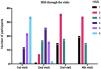
The HSS continuously decreased during the 2nd, 3rd, and 4th visits following treatment initiation (Fig. 1). Compared with baseline, the median (interquartile range) hair shedding score decreased to 5 (5–6) at the 2nd visit (P<.001), 4 (3–5) at the 3rd visit (P<.001), and 2 (1–2) at the 4th visit (P<.001) (Table 3). The time elapsed between COVID-19 and TE diagnosis was 117 days (80–181); between TE diagnosis and the 2nd visit, 38 days (33–54); and between the 2nd visit and the last visit when the TE stopped, 93 days (55–148).

When changes in the HHS were compared between FPHL and MAGA visits, no statistically significant difference was observed between baseline and the 2nd visit (FPHL: 2 [1–2] vs MAGA: 1 [0–2]; P=.095). In contrast, statistically significant differences were identified at the 3rd visit (P<.004) and at the 4th visit (P<.004) (Table 4).
Comparison of hair-shedding scale score change between patients with FPHL and MAGA at different visits.
| Hair-shedding scale | FPHL (n=35) | MAGA (n=17) | P-value* |
|---|---|---|---|
| Change of 1st visit vs 2nd visit | 2 (2–1) | 1 (0–2) | .095 |
| Change 1st visit vs 3rd visit | 3 (3–4) | 3 (2–3) | .004 |
| Change of 1st visit vs 4th visit | 3 (3–4) | 3 (2.5–3) | .004 |
Patients who developed hypertrichosis had a duration of treatment with minoxidil longer than those who did not, 396 (292–580) vs 259 (204–363), respectively (P=004). When the incidence of hypertrichosis after low-dose oral minoxidil treatment was compared between patients with preexisting hair disorders, those with FPHL showed a higher incidence rate (40%) than those with MAGA (11.8%) (Table 5).
Hypertrichosis in those with a previous diagnosis of any type of alopecia, and according to the duration of treatment.
| Hypertrichosis | Yes | No | P-value |
|---|---|---|---|
| FAGA (n=35) | 14 (40%) | 21 (60%) | 0.055* |
| MAGA (n=17) | 2 (11.8%) | 15 (88.2%) |
| Hypertrichosis | Yes (n=17) | No (n=52) | |
|---|---|---|---|
| Duration of treatment (days) | 396 (292–580) | 259 (204–363) | 0.004a |
The COVID-19 pandemic affected millions of people worldwide, causing a wide range of symptoms. In addition to the well-known respiratory symptoms and complications associated with SARS-CoV-2 infection, CATE develops in as many as 60% of infected patients.15 In our study, we had a predominance of women (72.5%), similar to what has been found in previous case series (around 80%).1 However, this has been attributed to probable different causes, one being the disparity between the immune response of both sexes, more susceptibility due to hormonal changes, being women more likely to notice hair thinning and, therefore, more likely to seek treatment.1
LDOM is the most recent breakthrough treatment and the new trend in treating different types of alopecia. LDOM acts dose-dependent to increase anagen duration, reduce telogen duration, increase fiber diameter, and enlarge miniaturized follicles.16 Furthermore, it has been described that increasing the dose of oral minoxidil by 1mg on average is associated with a change of 1.30μm of hair diameter, an increase in total hair density by 47.10hairs/cm2, and a change in terminal hair density of 9.1hairs/cm2 after 6 months of continuous therapy.17 These mechanisms of action result in decreasing shedding period and increase the hair diameter patients notice good results in CATE.
Recent studies outline a potential pathogenic link between ischemia and disruptions in the hair cycle. The involvement of the respiratory tract and subsequent hypoxemia could induce skin ischemia, diminishing the supply of growth factors to hair follicles.18 In addition, the viral prothrombotic properties may result in microthrombi formation and blood supply blockage.19 In a literature review conducted by Pietro on the correlation between hair loss and TE in patients with COVID-19, it was suggested that protecting cells from ischemia and promoting angiogenesis may serve as a potential treatment for COVID-19-induced hair loss.18 Based on this pathogenic pathway, the effect of minoxidil on blood perfusion may justify HSS improvement in our patients.
There are reports of topical minoxidil 2% in women and 5% in men for CATE treatment.4 However, to our knowledge, this is the first study that investigated the use of LDOM in patients with CATE. Previous research mentioned the usual beginning period for hair loss after COVID-19 diagnosis as 1–6 months.20 In our study, the median start of TE was 117 days (around 4 months) after the COVID-19 diagnosis, which was consistent with the literature. When we categorized the patients by chronicity, we found that acute TE was present in 79.7% of patients with COVID-19, and only 20.3% had chronic TE.
It has been reported that most patients with CATE suffered from a severe infection; however, this is inconsistent with our study since we found that most patients had mild and moderate infections, probably due to high vaccination among participants (75%).20 A bigger sample should be considered to accurately discern the correlation between the severity of COVID-19 and the degree of hair loss.
We did not find any statistical difference across COVID-19 variants. Vaccination per se could be a trigger for TE; new studies observed a higher incidence rate of alopecia following COVID-19 vaccination.15 Interestingly, more than 3/4 of the patients received at least 1 COVID-19 vaccine, while only about 1/3 received a booster.
In our study, 53 (76.8%) patients were on a dosage of 1mg, 14 (20.3%) on a dose of 2.5mg, and 2 (2.9%) on a dose of 5mg. A total of 21 (31.3%) patients reported adverse effects.21 Notably, most of our patients were women (72.5%), and the most reported dose in this set of patients was 1mg daily. The dose was mainly influenced by patient's tolerance, with greater doses in the male population vs women.
Response to LDOM was evaluated in the base of HSS. Our results showed a significant reduction in HSS. Compared with baseline, the median HSS was significantly lower at the 2nd visit (P<0.001), 3rd visit (P<0.001), and 4th visit (P<0.001), indicating a sustained medical response. In one study, 36 women with chronic telogen effluvium were treated with oral minoxidil 1mg daily, resulting in mean reductions in the HSS of 1.7 at 6 months and 2.58 at 12 months vs baseline.22 In our study, the time elapsed between COVID-19 and TE diagnosis was 117 days (80–181); between the TE diagnosis and the 2nd visit, 38 days (33–54); and between the 2nd visit and the last visit, when the TE stopped, 93 days (55–148). Compared with patients who are not on LDOM, the hair loss is stopped earlier than expected, as acute TE typically resolves within 6 months.2
Interestingly, about half of the patients had a previous diagnosis of FPHL or MAGA. When comparing the change in HSS between FPHL and MAGA, we found no significant difference in the change of HSS at baseline and 2nd visits between them. However, we found a significant difference in the change of HSS between FPHL and MAGA at the 3rd visit (P<0.004) and the 4th visit (P<0.004), suggesting that the response to LDOM may differ between these two males and women or have a better response with the addition of the underlying comorbid. The consideration of concurrent causes of hair loss, such as MAGA and FPHL, is noteworthy as they might explain the effectiveness of OM beyond the scope of TE alone.
Notably, approximately half of the patients had a prior diagnosis of FPHL or MAGA. When changes in HSS were compared between these groups, no significant differences were observed at baseline or at the 2nd visit. However, significant differences emerged at the 3rd and 4th visits (both P<0.004), suggesting a differential response to low-dose oral minoxidil between FPHL and MAGA. These findings indicate that the presence of concomitant hair disorders may influence treatment response and could partially explain the effectiveness of oral minoxidil beyond telogen effluvium alone.
Patients should be counseled on the possibility of transient increased shedding, advised not to discontinue therapy, and informed of the need for continuous low-dose oral minoxidil use to maintain therapeutic benefit. Overall, treatment was well tolerated, with only mild adverse effects reported. The most common adverse effect was hypertrichosis (24.6%), followed by peripheral edema (5.8%). These findings are consistent with former reports, in which hypertrichosis is the most frequently reported and appears to be dose dependent. Less common adverse effects included tachycardia and hypotension. No adverse event required treatment discontinuation.
Limitations of our study include the study design because a controlled clinical trial was not conducted, the small sample size, the lack of a control group, the lack of data collection regarding comorbidities and COVID-19 treatment, and the lack of a genotyping test to specify the COVID-19 variant, further studies should be performed to confirm efficacy. The time elapsed between visits varied depending on patients’ availability which may have introduced measurement variability. Further prospective studies with larger sample sizes and closer monitoring of participants are needed to confirm our results.
ConclusionsThis retrospective study aimed to evaluate the response to LDOM in adult patients with CATE; our findings suggest that daily LDOM is a safe and effective therapy due to a significant reduction in HSS from baseline in our patient cohort, less shedding, and low adverse effects. While more extensive prospective studies are necessary to determine treatment efficacy conclusively, our findings provide preliminary evidence supporting the use of LDOM in CATE.
ORCIDsC.D. Villarreal-Villarreal – 0000-0003-2432-2517
E. Boland-Rodriguez – 0000-0002-5077-9468
D. Asz-Sigall – 0000-0001-6287-0042
J.F. Molina-de la Garza – 0000-0001-6315-5462
D. Saceda-Corralo – 0000-0003-2773-7494
S. Vano-Galvan – 0000-0003-1848-5686
Conflicts of interestAll authors declared no conflicts of interest whatsoever.
Uncited references