A 43-year-old man presented to the dermatology clinic with a 7-month history of asthenia and recurrent flushing episodes, along with itching and a burning sensation. He had no relevant past medical history and denied any other cutaneous or systemic symptoms. The episodes occurred daily and lasted up to 2h.
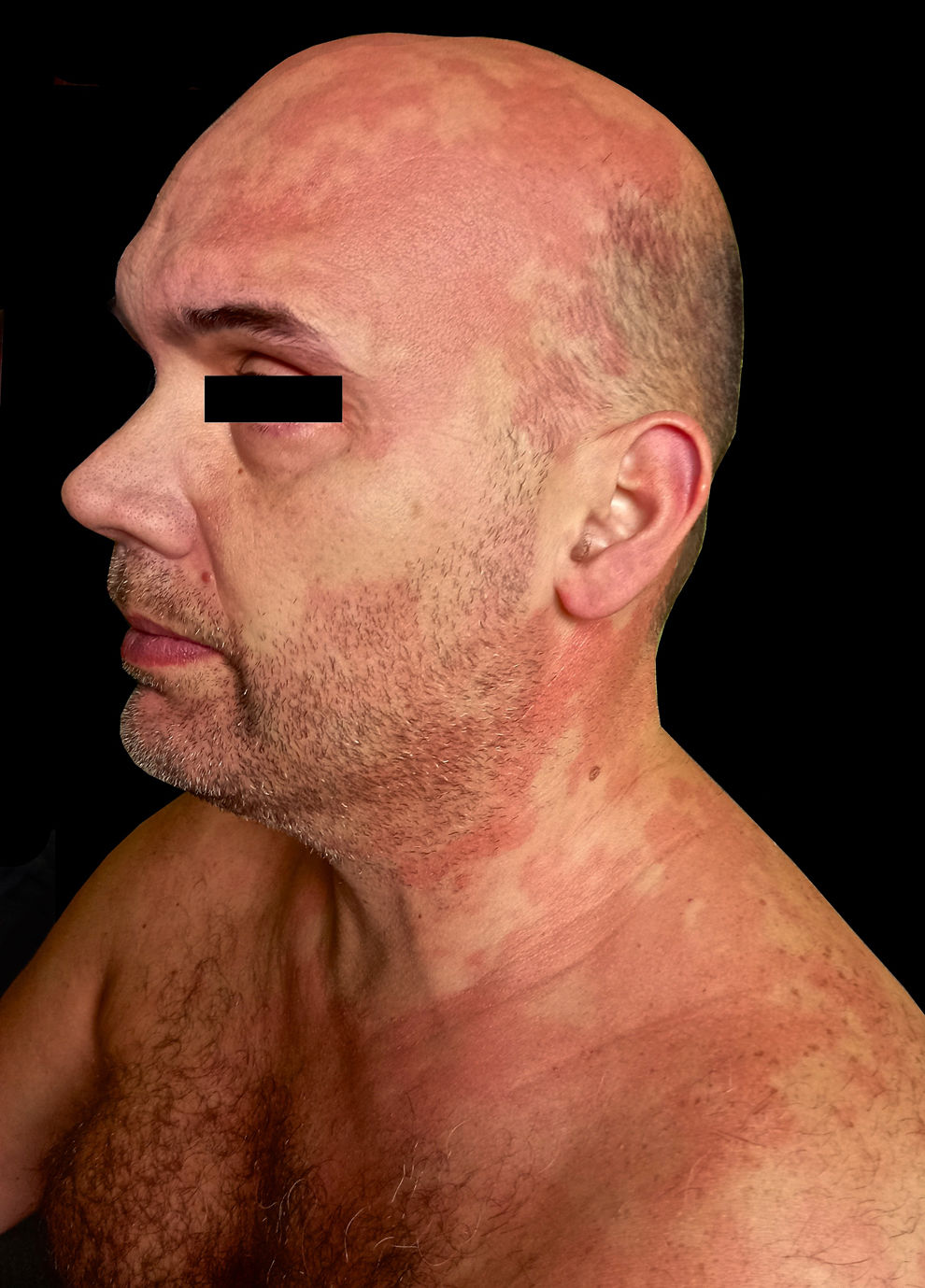
Physical examination revealed the presence of confluent, erythematous patches with geographic borders distributed primarily on the chest, upper back, arms, neck, and head (Fig. 1). A 24-h urinalysis revealed a 5-hydroxyindoleacetate excretion of 73.7μg (reference range, 2.0–8.0). The chest radiograph was normal, and abdominal computed tomography revealed an 8-cm mass in the left hepatic lobe consistent with metastasis.

Tumor resection surgery was performed, and the histopathological study was consistent with metastasis of a well-differentiated neuroendocrine tumor. The primary neoplasm was not found. After surgery, treatment with somatostatin analogs was started, and the flushing episodes have not recurred at the 1 year follow-up.
Carcinoid syndrome is a rare condition caused by the systemic circulation of vasoactive substances (especially serotonin) secreted mostly by intestinal neuroendocrine tumors. Signs and symptoms are diverse, and include flushing (85% of patients), diarrhea, and abdominal pain. The liver metabolizes and inactivates serotonin and other vasoactive substances. Therefore, many patients with carcinoid syndrome have liver metastases from neuroendocrine tumors that directly secrete these substances into the systemic circulation.