


Injectable dermal fillers are widely used in esthetic dermatology, but systematic safety surveillance remains limited. The SIDE-AEDV registry was established to characterize injectable filler procedures and support future evaluation of adverse events and associated risk factors in Spain.
MethodsSIDE-AEDV is a prospective, multicenter observational registry involving dermatologist members of the Spanish Academy of Dermatology and Venereology. Consecutive adult patients receiving dermal fillers were enrolled, and pseudonymized demographic, clinical, and procedural data were collected using REDCap. The protocol includes adverse event surveillance and follow-up at 180 days. This initial analysis describes baseline findings.
ResultsA total of 571 patients from five centers were enrolled; 96.3% were women, and the mean age was 51.2 years. Previous injectable treatments were reported by 46.2% of participants, with hyaluronic acid being the most frequently used filler. Previous moderate-to-severe complications were documented in 10.7% of patients with available data. Cannulas were used in 58.1% of procedures, and fanning was the most common injection technique (47.7%). Most injections were performed in the subdermal plane (70.4%). The preauricular region, jawline, and mandibular angle were the most frequently treated anatomical sites.
ConclusionsThe SIDE-AEDV registry provides a prospective framework for monitoring the safety of injectable dermal fillers in routine esthetic dermatology practice. Its initial findings characterize participating patients and injection techniques, establishing a foundation for future analyses of adverse events, potentially modifiable risk factors, and evidence-based safety recommendations.
Injectable filler treatments are among the most widely used procedures in esthetic dermatology, with increasing demand worldwide. They are considered medical devices indicated for volumetric correction of the face, folds, and wrinkles.1 Currently, the most frequently used fillers are hyaluronic acid, calcium hydroxylapatite, poly-l-lactic acid, polymethyl methacrylate, and autologous fat.
Although generally considered safe,2 fillers can cause adverse events related to patient characteristics, the product used, treatment planning, and injection technique.3 Events are classified according to severity (mild, severe, very severe), nature (inflammatory, infectious, or ischemic), and time of onset; the latter is the most widely used classification: immediate (<24h), early (1 day–1 month), and late (>1 month).4 Most events are mild and transient,5 although serious events with potentially substantial effects on quality of life have also been reported.6 No specific registries in Spain currently allow their frequency to be estimated. Existing evidence has important methodological limitations, including heterogeneous follow-up and underreporting of infrequent but clinically relevant adverse events.
Immediate adverse events are the most common and are generally mild and transient,7 including ecchymoses, hematomas, and edema in highly vascular areas such as the lips and periorbital region. However, severe complications such as vascular occlusion may occur, with a risk of tissue necrosis or permanent scarring if not managed appropriately.8 Permanent visual impairment and even unilateral blindness have also been documented,9 generally due to occlusive events involving branches of the ophthalmic artery, such as the central retinal, posterior ciliary, or supraorbital arteries,10 as well as stroke and transient ischemic attacks.11 Early adverse events include inflammatory nodules,12 which are not always granulomatous and may be infectious or arise through other inflammatory mechanisms.13,14 These nodules have traditionally been associated with poly-l-lactic acid and contaminants in certain batches of hyaluronic acid.15 In recent years, inflammatory nodules have been reported after SARS-CoV-2 infection or vaccination, usually in previously hyaluronic acid-treated areas. Nonspecific immunological mechanisms have been proposed, but current evidence supports only a temporal association without establishing causality.16 Late adverse events include persistent hematomas, skin discoloration, and persistent edema.17 Delayed-onset inflammatory nodules are the most relevant of these complications18 with an estimated frequency of 1–10% among filler recipients.19 Most adverse events reported in the literature occur immediately and are usually mild and transient (hematoma, edema, erythema), with estimated incidences of 10–20% according to previous studies.4,6 They have been particularly associated with low-molecular-weight hyaluronic acid and its potentially accelerated degradation.20 Biofilm formation has also been described as a key factor in these inflammatory reactions, complicating their clinical management.21 Autoimmune/inflammatory syndrome induced by adjuvants (ASIA) has likewise been reported in patients exposed to fillers.22
The safety profile of injectables in esthetic dermatology is an area of growing interest. Appropriate assessment can improve patient counseling, prevent complications, and optimize management; identifying modifiable factors associated with higher risk is essential.23 To address this need, the Academia Española de Dermatología y Venereología (AEDV) established SIDE-AEDV (Safety of Injectables in Aesthetic Dermatology). The objectives of SIDE-AEDV are:
- 1.
To describe the risk of adverse events associated with injectable filler treatments.
- 2.
To characterize patients who experience adverse events following injectable treatments.
- 3.
To describe the clinical features of different adverse events and their risk factors, especially preventable factors related to the patient, technique, and filler.
- 4.
To serve as an epidemiological surveillance system for newly marketed treatments and other changes that may affect safety.
We present the registry methodology and preliminary findings after the first year of SIDE-AEDV.
Materials and methodsDesignSIDE-AEDV is a prospective, multicenter observational cohort study that collects pseudonymized data from consecutive patients on adverse events related to injectable fillers in esthetic dermatology. Participation is open to all AEDV members.
Participating centersTo improve data homogeneity, Spanish centers performing at least 8 injections per month were eligible to participate.
Study populationTo minimize selection bias, participating centers included all consecutive patients who agreed to participate. Eligible patients were adults (≥18 years) receiving CE-marked dermal fillers during routine clinical practice at any body site. Legally incapacitated individuals and clinical trial participants were excluded.
Follow-upFor each filler administration, findings were recorded at baseline or within the first 24h (T0) and at 180 days (T1). Patients received a questionnaire by SMS asking whether they had experienced adverse events. Those reporting any abnormality were invited for an in-person consultation and evaluated by the responsible physician. Late complications identified after T1 were subsequently recorded following clinical assessment.
Variables measuredStudy data are collected and managed using REDCap (Research Electronic Data Capture) tools hosted by the AEDV.24 Variables are organized into 3 main categories: (i) participant characteristics, (ii) details of the filler injection episode, and (iii) adverse events associated with each filler. At enrollment, basic information is recorded, including age, sex, and previous injectable treatments. If patients have been treated previously, the materials used, treated sites, and any relevant complications are documented. Other health factors potentially influencing safety are also considered, including recent SARS-CoV-2 vaccination, pregnancy or breastfeeding, and ongoing psychiatric, autoimmune, infectious, or dermatological disorders.
Each treatment is analyzed by the product vial used, which is the basic unit of analysis. Recorded information includes brand, identifying code, administered volume, injection technique, use of a cannula or needle, practitioner experience, anatomical site, and injection depth. Adverse events were identified at T0 and T1 and coded using MedDRA (Medical Dictionary for Regulatory Activities). Events were classified by type (e.g., hematomas, nodules, ischemia, or neurological disorders), severity, presence or absence of sequelae, and outcome. Descriptions of the events and any measures taken (implant removal, batch change, etc.) were also recorded when applicable.
This analysis describes participant characteristics and their first filler procedure after the registry's first year. Qualitative variables are reported as counts and percentages, and quantitative variables as means and standard deviations.
The SIDE-AEDV registry was approved by the Comité de ética de la investigación con medicamentos de Galicia (CEIm-G 2022/448), in accordance with the Declaration of Helsinki and applicable legislation. All patients voluntarily provided written informed consent before inclusion.
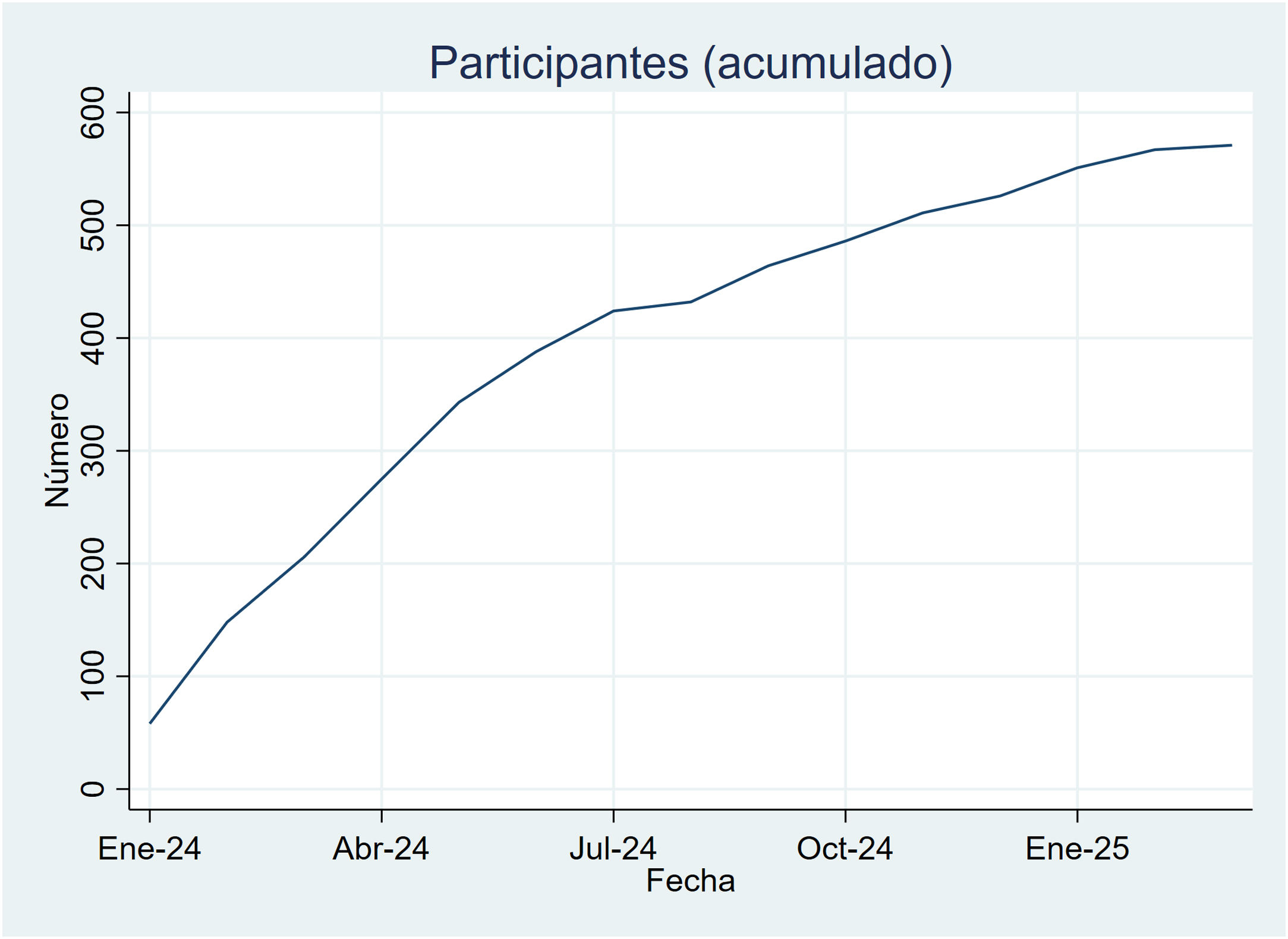
ResultsThe SIDE-AEDV registry began in January 2024 and prospectively collected information on initial injectable treatments performed in Spanish dermatology clinics offering esthetic procedures. By March 2025, most individuals invited to participate had agreed (571/600). These 571 participants were recruited from five centers in different autonomous communities: Clínica Sara Carrasco, Gavín Dermatólogos, Clínica Sandra Mateo, Clínica IMR, and Demax Clinic. Fig. 1 illustrates recruitment during the first year of SIDE-AEDV.
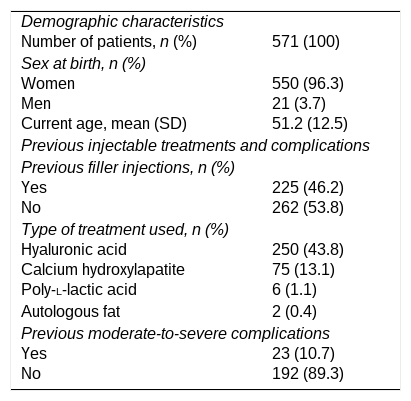
Patient characteristicsOf the 571 participants, 550 (96.3%) were women; no transgender participants were recorded. Mean age was 51.2 years (SD, 12.5). A total of 46.2% (225/571) had previously received injectable treatments. Hyaluronic acid was the most frequently used material, reported in 250 cases (43.8%), followed by calcium hydroxylapatite in 75 (13.1%), poly-L-lactic acid in six (1.1%), and autologous fat in two (0.4%) (Table 1). Previous moderate or severe complications were reported by 10.7% (23/571) (Table 1).
Baseline characteristics of participants enrolled in SIDE-AEDV.
| Demographic characteristics | |
| Number of patients, n (%) | 571 (100) |
| Sex at birth, n (%) | |
| Women | 550 (96.3) |
| Men | 21 (3.7) |
| Current age, mean (SD) | 51.2 (12.5) |
| Previous injectable treatments and complications | |
| Previous filler injections, n (%) | |
| Yes | 225 (46.2) |
| No | 262 (53.8) |
| Type of treatment used, n (%) | |
| Hyaluronic acid | 250 (43.8) |
| Calcium hydroxylapatite | 75 (13.1) |
| Poly-l-lactic acid | 6 (1.1) |
| Autologous fat | 2 (0.4) |
| Previous moderate-to-severe complications | |
| Yes | 23 (10.7) |
| No | 192 (89.3) |
SD, standard deviation; n, total sample.
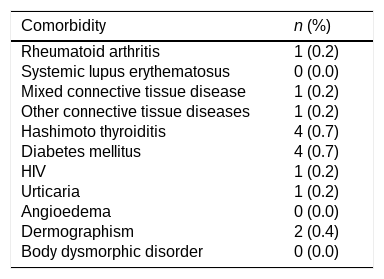
Among the 571 participants, 15 (2.6%) had comorbidities. The most common were Hashimoto thyroiditis and diabetes mellitus, each reported in four cases (0.7%), followed by dermographism (two cases; 0.4%) and various systemic connective tissue diseases (one case; 0.2%). No cases of systemic lupus erythematosus, angioedema, or body dysmorphic disorder were reported (Table 2).
Comorbidities among SIDE-AEDV participants.
| Comorbidity | n (%) |
|---|---|
| Rheumatoid arthritis | 1 (0.2) |
| Systemic lupus erythematosus | 0 (0.0) |
| Mixed connective tissue disease | 1 (0.2) |
| Other connective tissue diseases | 1 (0.2) |
| Hashimoto thyroiditis | 4 (0.7) |
| Diabetes mellitus | 4 (0.7) |
| HIV | 1 (0.2) |
| Urticaria | 1 (0.2) |
| Angioedema | 0 (0.0) |
| Dermographism | 2 (0.4) |
| Body dysmorphic disorder | 0 (0.0) |
Note: Total patients enrolled in the SIDE-AEDV baseline cohort (n=571).
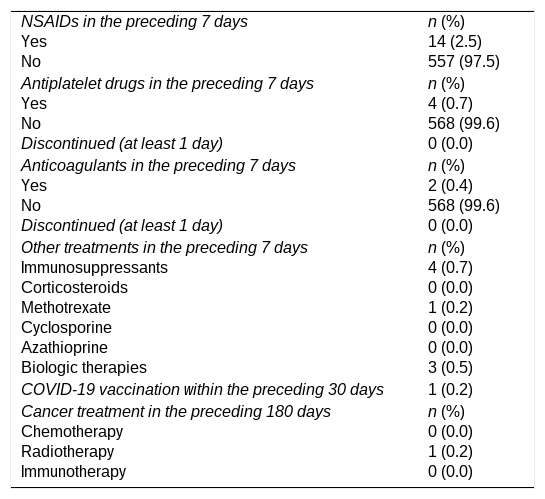
During the 7 days prior to injection, a total of 14 patients (2.5%) had taken nonsteroidal anti-inflammatory drugs, four (0.7%) antiplatelet drugs, and two (0.4%) anticoagulants; none of these drugs had been discontinued beforehand. Four participants (0.7%) were on immunosuppressive therapy, including 1 (0.2%) on methotrexate and 3 (0.5%) on biologic therapies. One participant (0.2%) had received a SARS-CoV-2 vaccine within the preceding 30 days, and three (0.5%) had received cancer treatment within the preceding 6 months (Table 3).
Concomitant treatments prior to filler injection.
| NSAIDs in the preceding 7 days | n (%) |
| Yes | 14 (2.5) |
| No | 557 (97.5) |
| Antiplatelet drugs in the preceding 7 days | n (%) |
| Yes | 4 (0.7) |
| No | 568 (99.6) |
| Discontinued (at least 1 day) | 0 (0.0) |
| Anticoagulants in the preceding 7 days | n (%) |
| Yes | 2 (0.4) |
| No | 568 (99.6) |
| Discontinued (at least 1 day) | 0 (0.0) |
| Other treatments in the preceding 7 days | n (%) |
| Immunosuppressants | 4 (0.7) |
| Corticosteroids | 0 (0.0) |
| Methotrexate | 1 (0.2) |
| Cyclosporine | 0 (0.0) |
| Azathioprine | 0 (0.0) |
| Biologic therapies | 3 (0.5) |
| COVID-19 vaccination within the preceding 30 days | 1 (0.2) |
| Cancer treatment in the preceding 180 days | n (%) |
| Chemotherapy | 0 (0.0) |
| Radiotherapy | 1 (0.2) |
| Immunotherapy | 0 (0.0) |
At the time of treatment, 5 participants (0.9%) had active acne, rosacea, or perioral dermatitis. No cases of active facial eczema, skin abscesses, or pregnancy were recorded at the time of injection. Three participants (0.5%) were breastfeeding.
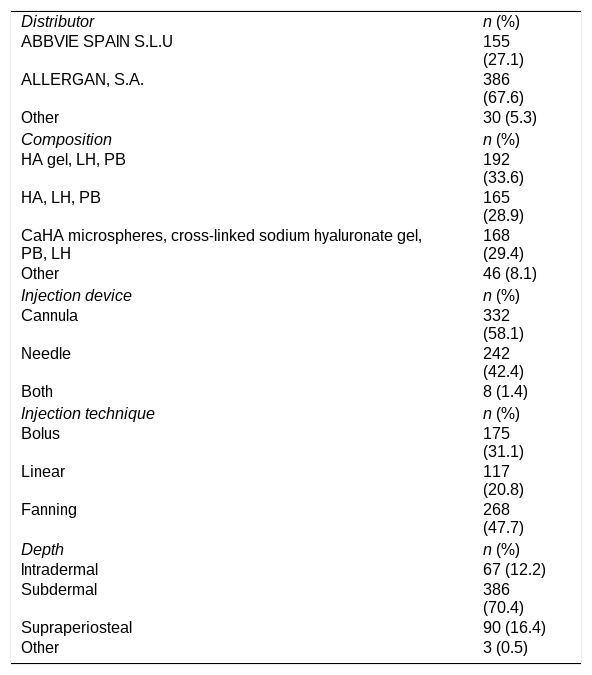
Technical characteristics of the proceduresA total of 571 first procedures were recorded. Product distributors were Allergan, S.A. for 386 vials (67.6%), Abbvie Spain S.L.U. for 155 (27.1%), and other manufacturers for 30 (5.3%). The most common vial formulation was hyaluronic acid gel, lidocaine hydrochloride, and phosphate buffer, used in 192 procedures (33.6%). In 168 procedures (29.4%), the product contained calcium hydroxylapatite microspheres combined with cross-linked sodium hyaluronate gel, phosphate buffer, and lidocaine hydrochloride. Another hyaluronic acid formulation, also containing lidocaine hydrochloride and phosphate buffer, was used in 165 procedures (28.9%). Other formulations accounted for 46 procedures (8.1%) (Table 4).
Characteristics of vials used and anatomical sites.
| Distributor | n (%) |
| ABBVIE SPAIN S.L.U | 155 (27.1) |
| ALLERGAN, S.A. | 386 (67.6) |
| Other | 30 (5.3) |
| Composition | n (%) |
| HA gel, LH, PB | 192 (33.6) |
| HA, LH, PB | 165 (28.9) |
| CaHA microspheres, cross-linked sodium hyaluronate gel, PB, LH | 168 (29.4) |
| Other | 46 (8.1) |
| Injection device | n (%) |
| Cannula | 332 (58.1) |
| Needle | 242 (42.4) |
| Both | 8 (1.4) |
| Injection technique | n (%) |
| Bolus | 175 (31.1) |
| Linear | 117 (20.8) |
| Fanning | 268 (47.7) |
| Depth | n (%) |
| Intradermal | 67 (12.2) |
| Subdermal | 386 (70.4) |
| Supraperiosteal | 90 (16.4) |
| Other | 3 (0.5) |
HA, hyaluronic acid; LH, lidocaine hydrochloride; CaHA, calcium hydroxylapatite; n, total sample; PB, phosphate buffer.
Cannulas were used more frequently (58.1%) than needles (42.4%). Fanning was the most common injection technique (47.7%), followed by bolus injection (31.1%) and the linear technique (20.8%). Regarding injection depth, 70.4% were subdermal, 16.4% supraperiosteal, and 12.2% intradermal (Table 4).
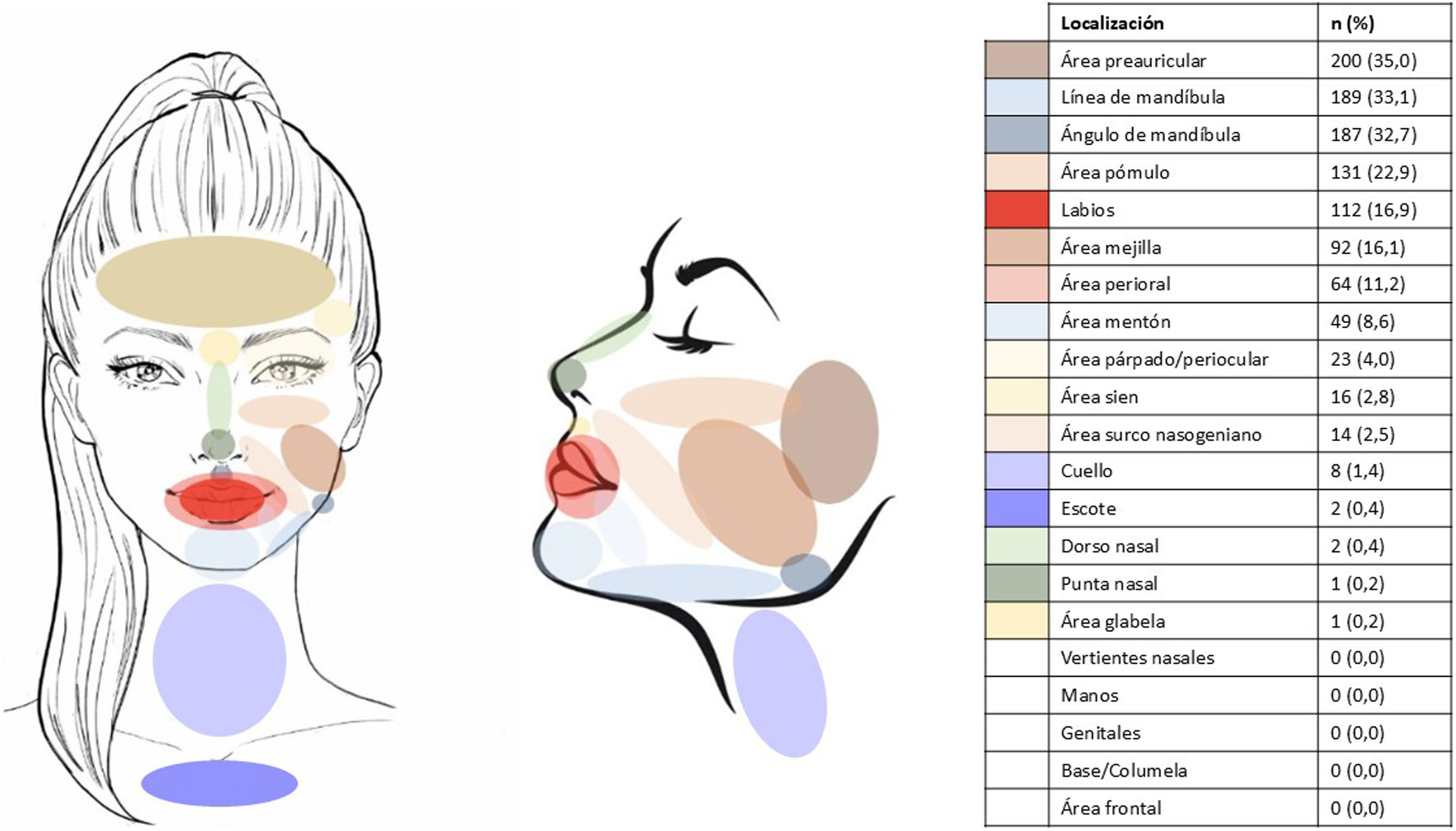
Fig. 2 illustrates the anatomical distribution and frequency of first procedures (as a patient could have several treatment sites, percentages for each site are calculated per patient). The most frequently treated sites were the preauricular region (35.0%), jawline (33.1%), and mandibular angle (32.7%). No procedures were reported in the nasal base/columella, genitalia, hands, nasal sidewalls, or forehead.
DiscussionThis study presents the protocol, methodology, and design of SIDE-AEDV, the first registry of injectable safety in esthetic dermatology in Spain, together with baseline data from its first year.
Preliminary SIDE-AEDV data provide an initial picture of real-world esthetic dermatology practice involving fillers in Spain. In this first phase, most patients were women (96.3%) around 50 years of age, and most had no significant comorbidities.
One of the main contributions of this study is its detailed characterization of pre-existing clinical conditions and concomitant treatments. This will enable medium- and long-term analyses of associations between specific risk factors and adverse events. Systematic data collection on anticoagulant or immunosuppressive treatment and prior infections will allow more precise assessment of complex clinical situations and contribute to personalized clinical recommendations.
From a technical perspective, there was a clear preference for hyaluronic acid fillers and for injection into anatomical sites considered relatively low risk, such as the preauricular region, jawline, mandibular angle, and cheekbone area. Although this choice may reflect safety considerations and the injector's prior experience, it may also reflect the esthetic demands of patients attending the participating centers.25
Collecting information on injection technique, device, and depth is an added strength of the registry because these factors influence immediate and delayed complications. Most injections were performed using cannulas in the subdermal plane, potentially reflecting a preventive strategy against vascular or neurological events. This is consistent with real-world observational studies associating more conservative techniques with fewer severe adverse events, without necessarily reducing esthetic effectiveness.26
Furthermore, SIDE-AEDV systematically records concomitant treatments, recent vaccination, and infection history, allowing future study phases to examine possible clinical interactions with fillers. Including variables such as SARS-CoV-2 vaccination and immunosuppressive medication is particularly relevant because some studies have suggested associations with delayed inflammatory reactions following previous hyaluronic acid treatment, although no clear causal relationship has been established.23
Although the overall clinical profile of participants did not include major comorbidities, some had experienced moderate or severe complications from previous treatments. This finding highlights the importance of structured follow-up tools to assess treatment safety not only at first exposure but also in individuals with a history of adverse events.
A strength of this study is its prospective design, structured data collection, and active follow-up, allowing standardized information to be integrated into an electronic platform with uniform recording criteria. Limitations include the descriptive nature of the results and the fact that most procedures were performed at highly experienced centers, potentially limiting generalizability to other clinical settings. To reduce this bias, the registry will seek participation from a wider range of centers. The limited number of adverse events detected at this stage also precludes analyses of associations or firm conclusions regarding differences in safety between products, techniques, or patient profiles. Importantly, this study analyzes only baseline registry data and therefore cannot yet present medium- or long-term follow-up findings on adverse events. These outcomes will be addressed in subsequent SIDE-AEDV publications as enrollment and follow-up increase. In addition, some potentially relevant clinical and technical variables (e.g., total number of vials per patient, anesthesia type, recent dental procedures, intercurrent infections, alcohol use, or supplements/herbal products) were not systematically recorded during the initial phase. These should be considered in future expansions to better characterize possible adverse-event risk factors. Although the registry protocol includes a follow-up questionnaire at 180 days (T1), its findings are not included in this initial analysis and will be reported in future publications.
At this stage, SIDE-AEDV provides a useful means of describing current clinical practice and laying the groundwork for future analyses of safety, effectiveness, and comparisons between products. Continuation of the registry, recruitment of additional centers as an open AEDV initiative, and larger patient numbers will allow more accurate characterization of adverse-event risk factors in esthetic dermatology and support the development of evidence-based clinical practice guidelines.
FundingThis study was funded through the 2024 “Juan de Azúa” Collaboration Grant with the AEDV Research Unit, awarded to Juan-Carlos Hernández-Rodríguez.
Conflicts of interestNone declared.